

A vegetable discovery: Cauliflower
A vegetable discovery: Cauliflower
Welcome back to A Vegetable Discovery, where I tell the story of one vegetable at a time, so we can look at it with new eyes and bring more curiosity to the table.
Today it’s the turn of cauliflower, which is in season right now. Do you like cauliflower, dear reader?
What are we actually eating?
There is something about cauliflower that really makes my point about looking at food with new eyes. I think about it every time, I love sharing it with the children, and I thought you might like it too.
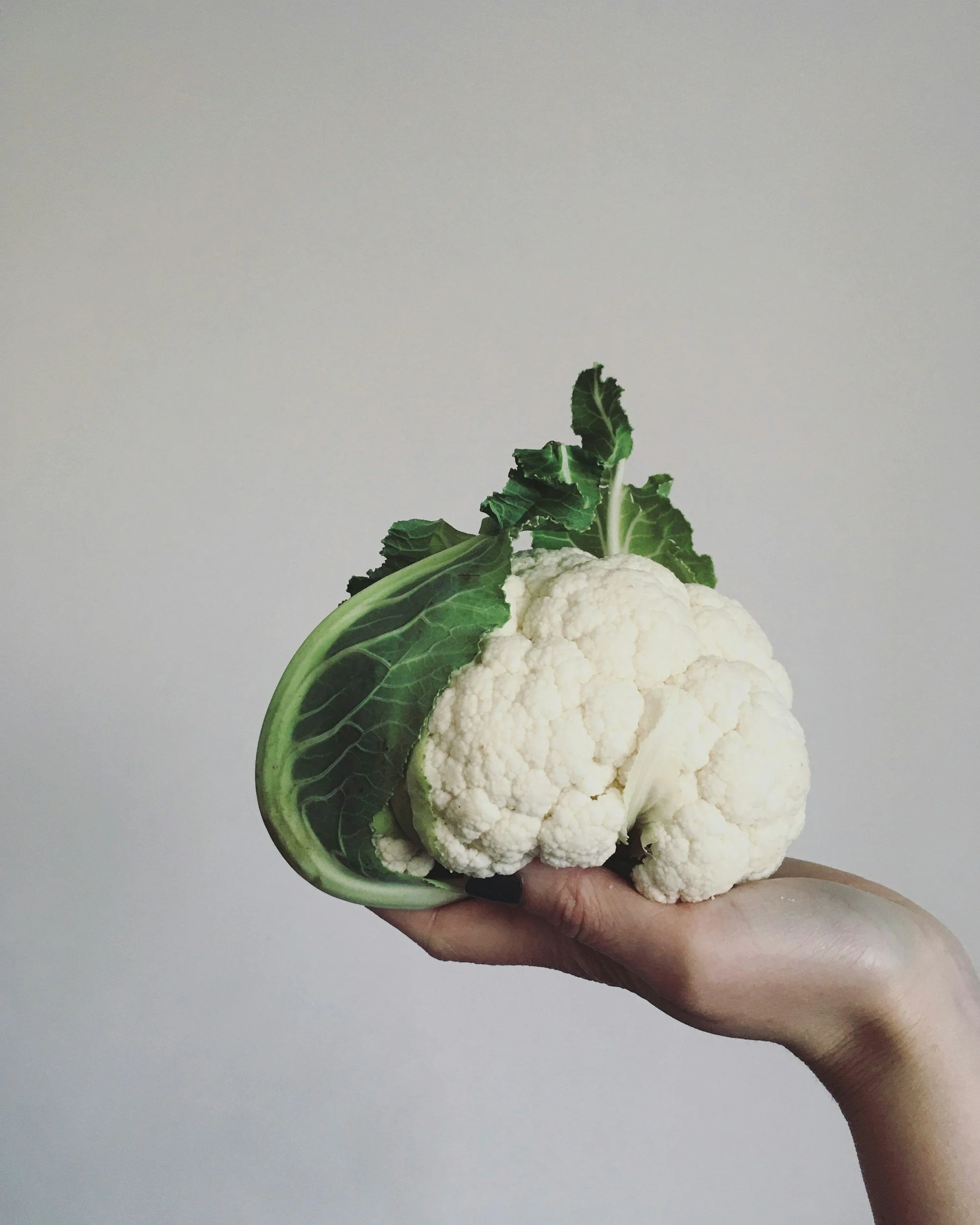
When we eat cauliflower, we are eating a flower.
Or better, the flower buds, packed tightly together before they have a chance to open.
In Italian it is called cavolfiore, which literally means “cabbage flower”.
That is no coincidence, because cauliflower is a close relative of cabbage.
It belongs to the same species as cabbage, broccoli and kohlrabi, and to the wider Brassicaceae family, which also includes radishes and rocket. Same family, many different shapes.
When I walk around the market with children, I love to show them all the different vegetables from this family.
They find it mind-blowing, and it makes me appreciate these vegetables even more.
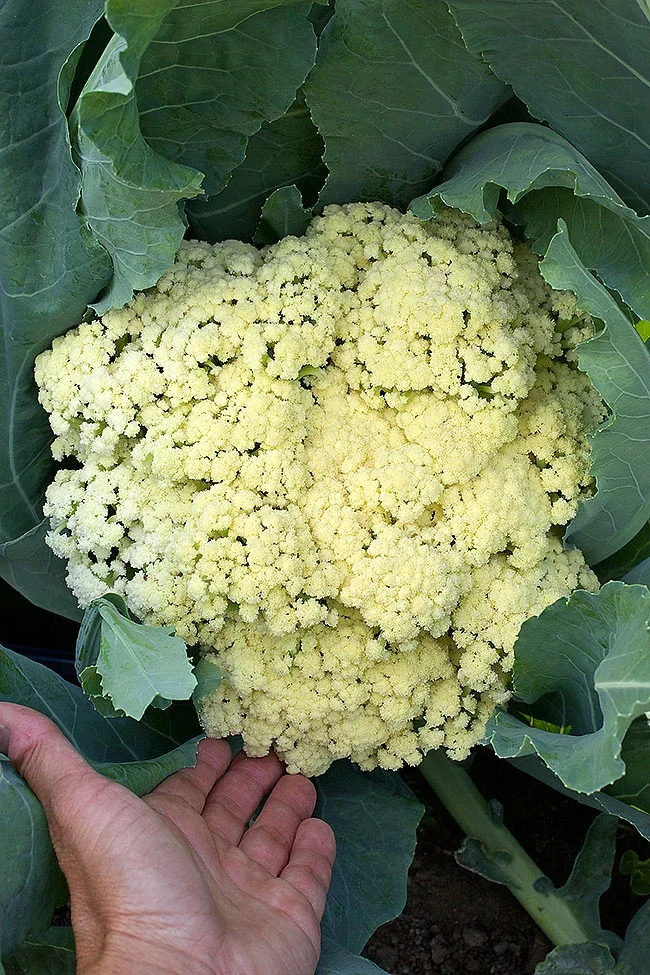
Beautiful Picture borrowed from Renee’s Garden
Where does cauliflower come from?
Cauliflower comes from the eastern Mediterranean, in the area we now call the Middle East, although nobody knows its exact origin.
It was developed many centuries ago. Arab botanists of the 12th and 13th centuries wrote about it and linked it to the island of Cyprus, and from there it travelled slowly to Europe.
It is thought to have reached Italy around 1490, so it has been on European tables for a very long time.
In its early days in Europe it was considered a rare delicacy, a vegetable for the gardens of the wealthy. I find this so funny: something so common for us today used to be a rarity!
Not only white
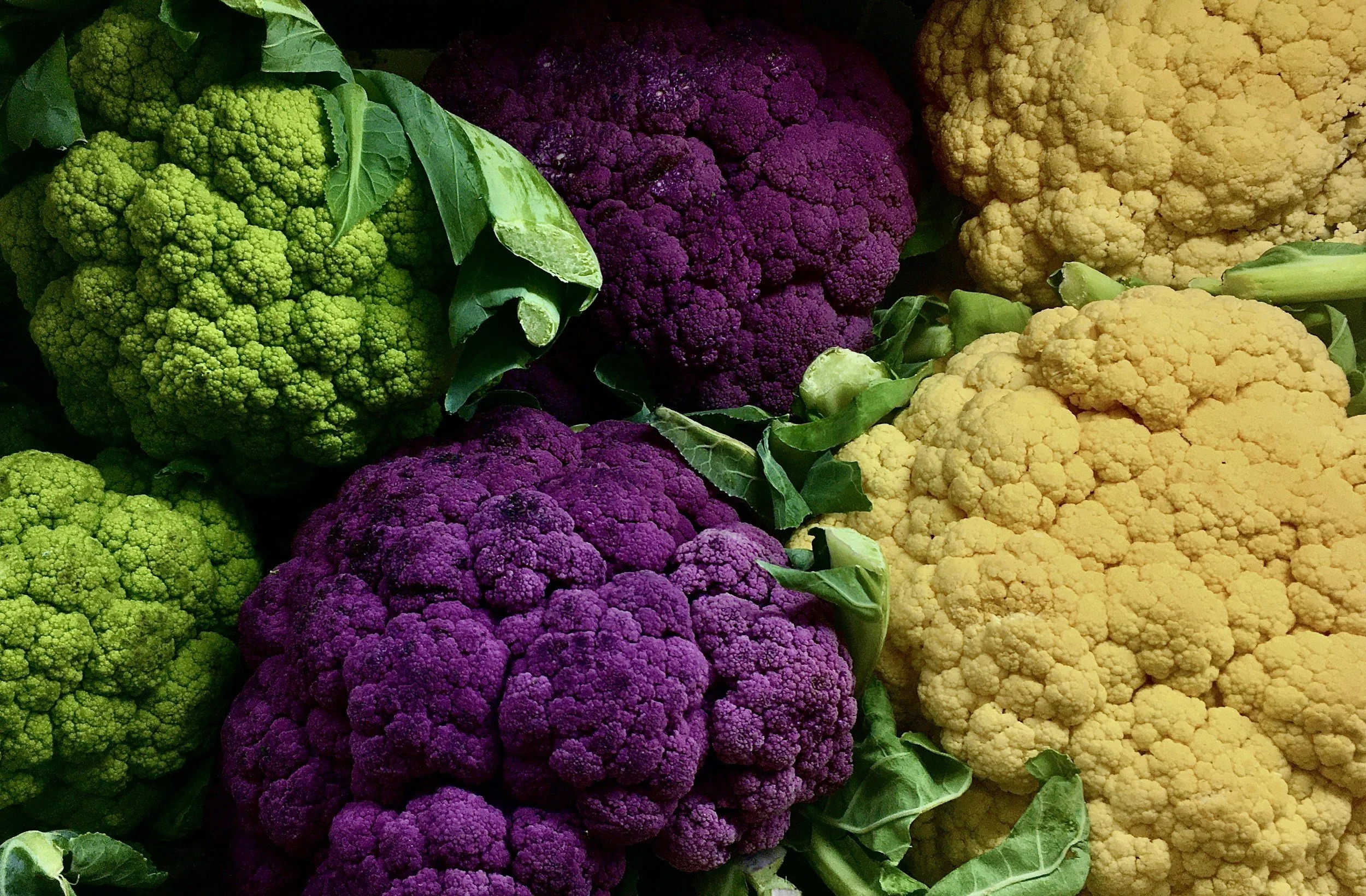
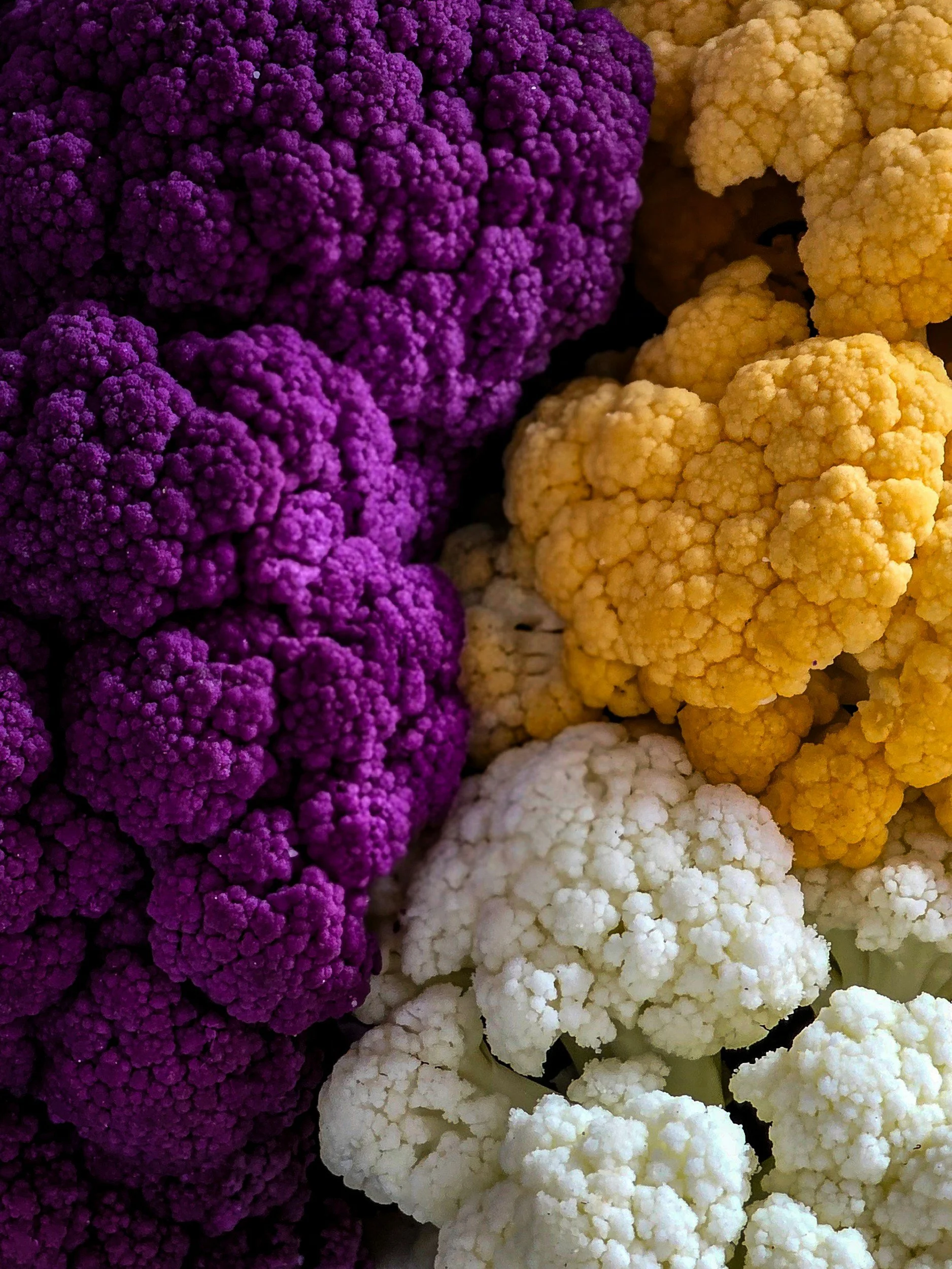
There are hundreds of varieties of cauliflower, and they are not all white.
You can find purple, orange and green ones, and the amazing Romanesco with its spirals.
The orange ones get their colour from beta-carotene, the same pigment found in carrots, and the purple ones from anthocyanins, the same pigments that colour red cabbage.
Growers also divide cauliflowers into four main groups:
The Italian type (the oldest, from which modern cauliflowers developed),the northern European type (developed in Germany in the 18th century), the north-western European type (developed in France in the 19th century) and the Asian type (adapted to warmer climates).
I have tried and cooked many types of cauliflower, and my favourites are definitely the purple one and the Romanesco!
About the flavors I have to admit that I don’t notice much of a difference, beside the romanesco, that taste slightly less sweet.
I’m not sure I have ever had an Asian one, although perhaps I ate some when I was travelling in the Philippines.
How many have you tried? And your kids?
When I was a kid I ate cauliflower easily, because my grandmother added half a lemon (organic, of course) to the cooking water, and it helped with the smell. I understand that the smell can be a turn-off for many children, and for adults too!
Cooking together always helps ease children into new smells and new ingredients.
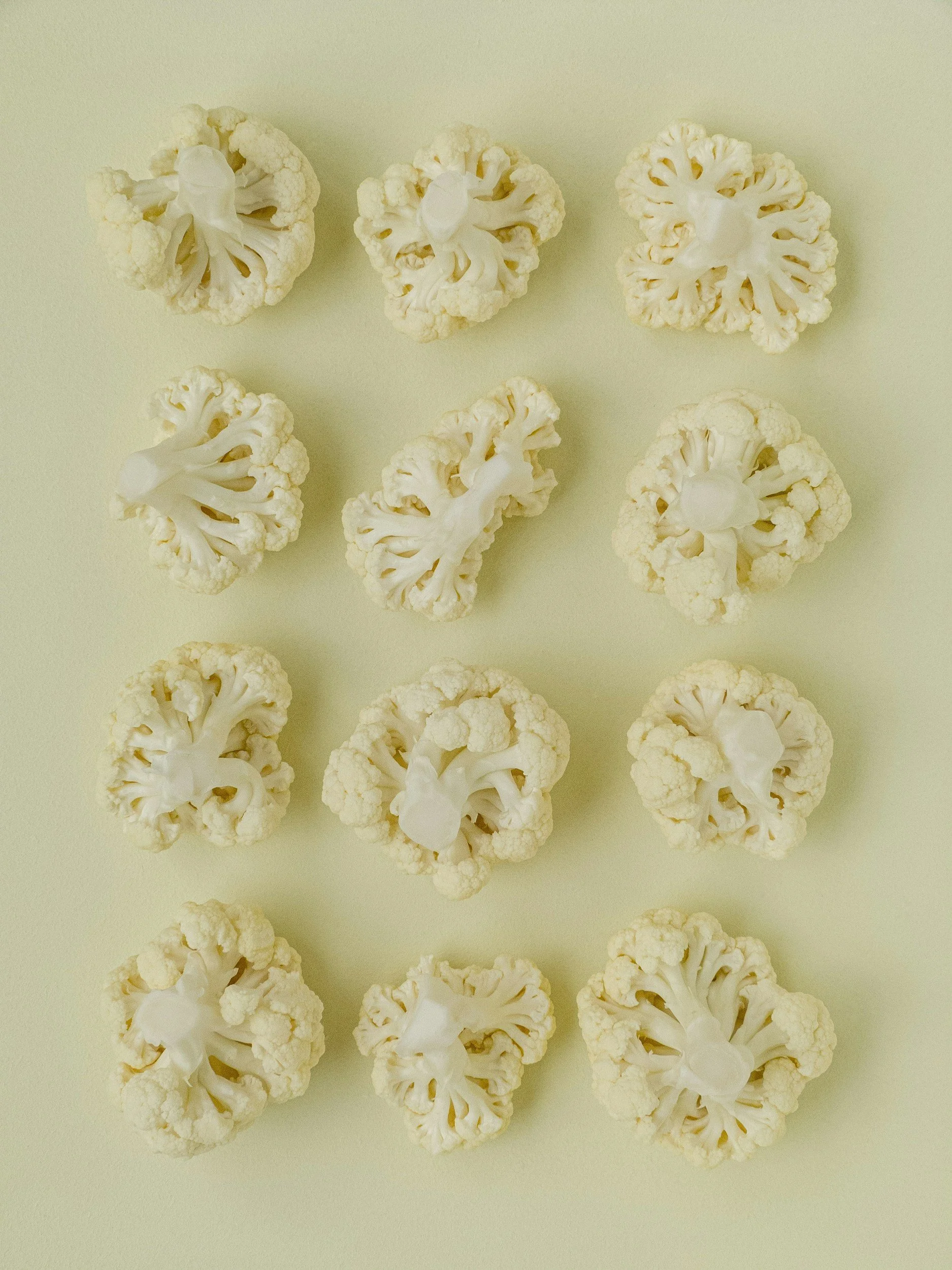
I suggest asking your child to help you clean the cauliflower and detach the florets.
It helps them become more curious about it, and don’t worry if they don’t eat it the first time! Cooking it together is already a revolution. New habits take time, be patient, it will pay back.
Don’t throw away the leaves.
Blanched briefly, they make a wonderful pesto, or you can add them to a frittata.
How I cook it with kids
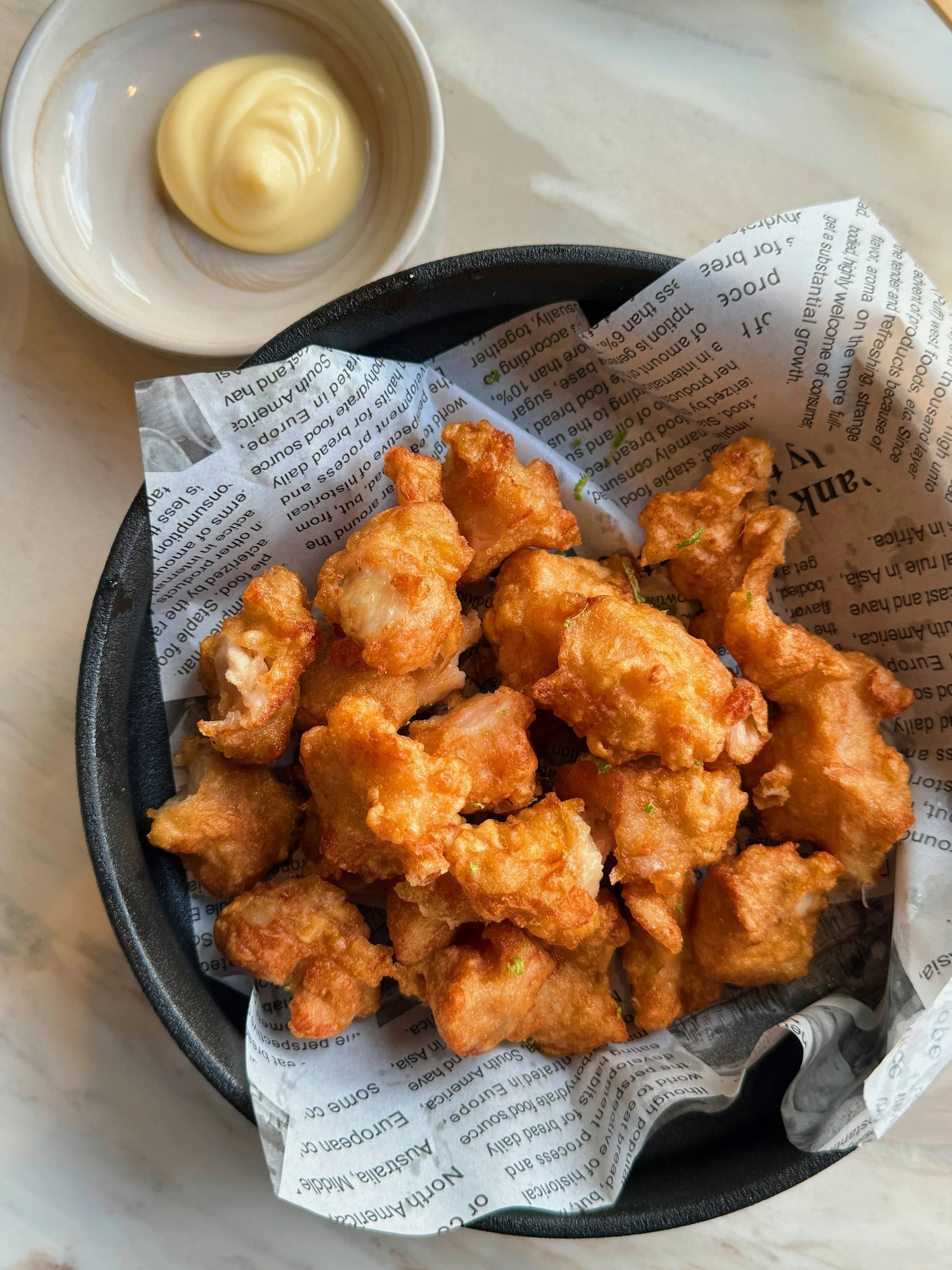
My first recipe when I want children to discover cauliflower is always cauliflower fritters. With children it works every time.
My grandma used to say that even a shoe tastes good fried! She is so right, and I use this trick with new vegetables too sometimes!
I serve them with a creamy sauce: sriracha yoghurt or garlic yoghurt sauce are my favourites.
My advice to parents
In all my years of cooking with children, one thing is clear to me: to get your child excited about food, you need to be excited too. That’s why doing activities together around food can be so powerful. For example, go to the market together. Look at all the colours and shapes, explore the market and make it familiar. Let your child choose one cauliflower. Find a recipe together and prepare it as a family.
Don’t force them to eat it. They can try it, but it’s a new food, so it is important that they don’t feel pressured. Going to the market, picking a vegetable and cooking it together is already a huge deal for them. You want them to feel calm and not rushed, right?
Above all, I advise you to ask different questions than “do you like it?”, because that one can feel like pressure.
Try instead: What texture does it have? Is it sweet or salty? Soft or hard? Questions like these invite curiosity and take away the judgement.
The more curious the table, the easier it is to try something new!
And please don’t hesitate to let me know how it goes and to share your experience. I would love to hear more about your table adventures.
Thank you for reading this far.
If you enjoyed this discovery, you can find the other vegetables of the season in Seasonal Vegetables in November: What to Cook with Kids and the story of the pumpkin.
.
